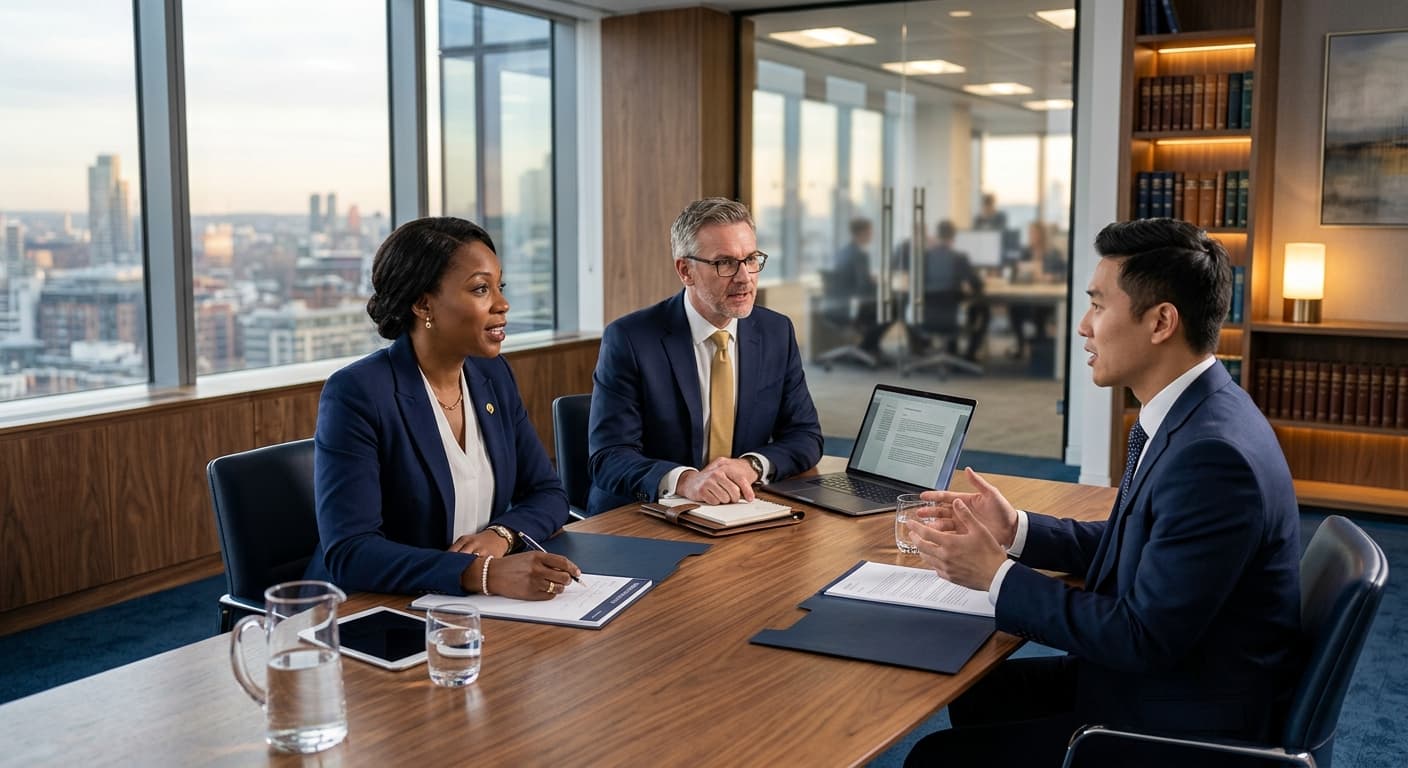
Hiring legal professionals requires more than reviewing resumes and confirming credentials. Legal roles demand precision, analytical thinking, ethical judgment, and strong communication skills. A well-structured interview process helps recruiters and hiring managers identify candidates who not only have the right legal knowledge but can also thrive in a professional legal environment.
At FavHire Consulting, we help organizations evaluate legal talent through thoughtful, structured interviews that reveal both technical competence and long-term potential.
Why Legal Interviews Require a Different Approach
Legal roles carry significant responsibility. Attorneys, paralegals, and legal assistants must handle confidential information, navigate complex regulations, and communicate clearly with clients and colleagues.
Because of these responsibilities, interviewing legal candidates should focus on evaluating:
-
Legal expertise and analytical thinking
-
Professional ethics and integrity
-
Communication and writing skills
-
Attention to detail
-
Cultural fit within the organization
A structured interview helps ensure that these factors are assessed consistently for every candidate.
Key Steps to Interview Legal Candidates Effectively
1. Prepare Clear Interview Objectives
Before interviewing candidates, recruiters and hiring managers should define what success looks like in the role.
Consider questions such as:
-
What legal experience is essential for this position?
-
What types of cases, transactions, or projects will the candidate handle?
-
What professional qualities are required to succeed in the organization?
Clear interview objectives help interviewers evaluate candidates consistently and fairly.
2. Ask Role-Specific Legal Questions
Technical competence is essential in legal hiring. Interview questions should explore the candidate’s experience with relevant practice areas.
Examples of effective questions include:
-
Can you describe a complex legal issue you handled and how you resolved it?
-
How do you approach legal research when dealing with unfamiliar regulations?
-
What strategies do you use to manage multiple deadlines in high-pressure situations?
These questions reveal how candidates apply legal knowledge in real-world scenarios.
3. Assess Analytical and Problem-Solving Skills
Legal professionals must analyze information carefully and develop logical arguments. Interviewers should evaluate how candidates approach complex legal challenges.
You may ask candidates to:
-
Walk through their reasoning in a previous case or project
-
Explain how they identified risks in a legal matter
-
Describe how they balanced legal considerations with client objectives
These discussions demonstrate how candidates think and solve problems.
4. Evaluate Communication Skills
Clear communication is critical in legal work. Legal professionals must explain complex legal concepts to clients, colleagues, and courts in a concise and understandable way.
Interviewers should pay attention to:
-
How clearly candidates explain legal concepts
-
Whether their responses are structured and logical
-
Their ability to communicate professionally and confidently
Strong communication skills are essential for both client interactions and internal collaboration.
5. Discuss Ethical Judgment and Professional Responsibility
Ethics play a central role in legal practice. Interviewers should evaluate how candidates approach ethical challenges and professional responsibility.
Example questions may include:
-
How would you handle a situation where a client requests advice that may conflict with legal or ethical standards?
-
Can you describe a time when you had to make a difficult ethical decision in your work?
These discussions help assess the candidate’s integrity and professional judgment.
6. Evaluate Cultural Fit
Legal professionals often work closely with teams, clients, and leadership. Cultural alignment with the organization can influence long-term success.
Interviewers should consider:
-
The candidate’s work style and collaboration approach
-
Their ability to manage workload and deadlines
-
Whether their values align with the organization’s professional standards
Candidates who align with both the role and the organization’s culture are more likely to succeed long term.
7. Provide Opportunities for Candidate Questions
Interviews should also allow candidates to ask questions about the organization, team structure, and expectations.
Encouraging candidate questions helps recruiters understand:
-
The candidate’s priorities and motivations
-
Their level of interest in the role
-
Whether the opportunity aligns with their career goals
This conversation helps both parties determine whether the role is the right fit.
Common Mistakes to Avoid When Interviewing Legal Candidates
Recruiters sometimes make mistakes that limit their ability to identify strong legal talent.
Common mistakes include:
-
Focusing only on academic credentials rather than practical experience
-
Conducting unstructured interviews without clear evaluation criteria
-
Overlooking communication skills and cultural fit
-
Rushing interviews due to hiring pressure
Avoiding these mistakes leads to more informed hiring decisions.
How FavHire Supports Legal Recruitment
FavHire Consulting specializes in legal and professional placements. Our recruitment process helps organizations identify candidates who possess both the technical expertise and professional qualities required for success in legal roles.
We support clients by:
-
Conducting thorough candidate screening
-
Evaluating legal knowledge and analytical ability
-
Assessing communication style and cultural alignment
-
Presenting highly qualified candidates ready for interview
This structured approach helps organizations hire legal professionals who contribute to long-term success.
Conclusion
Interviewing legal candidates effectively requires preparation, structured evaluation, and a focus on both technical expertise and professional judgment. By asking thoughtful questions, evaluating communication skills, and assessing ethical decision-making, recruiters can identify candidates who will thrive in demanding legal environments.
With the right interview approach—and support from experienced recruitment partners like FavHire—organizations can build stronger legal teams and make confident hiring decisions.